
Self to Lose – Self to Find: A Fangirl Book Review

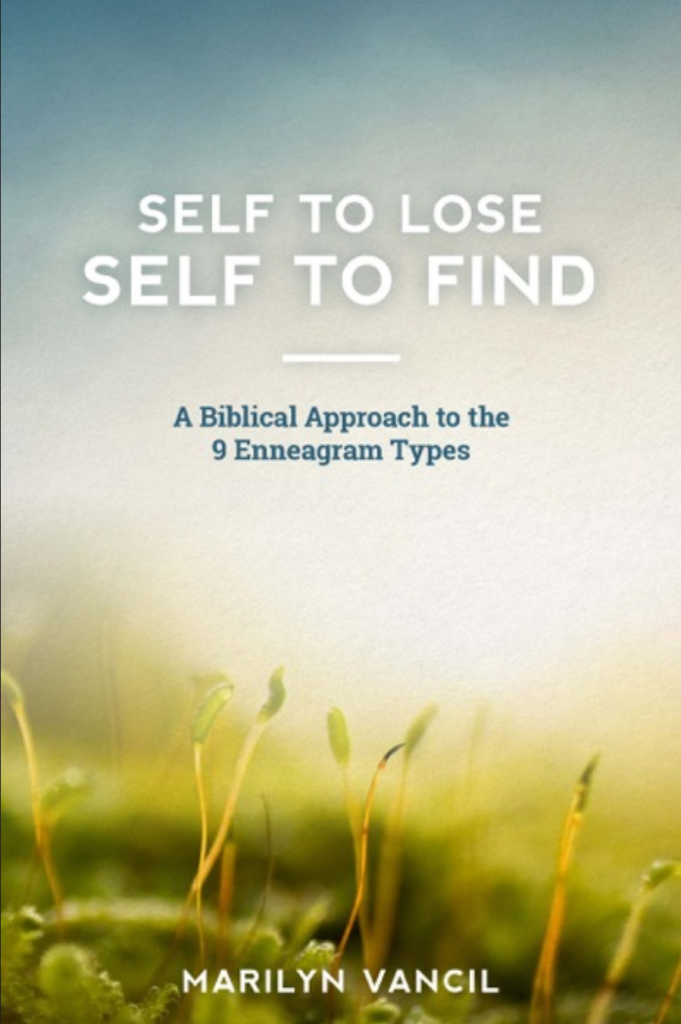
In this post, I’m reviewing Marilyn Vancil’s new book, Self to Lose – Self to Find: A Biblical Approach to the 9 Enneagram Types. I’ll just say it up front: this is not an impartial review, because I am in love with this book! I don’t even know where to begin describing it, which is the sort of thing that happens when you’re in love. But I will try.
First, a big-picture overview: this book is full of grace. It’s written with great kindness and welcoming, in keeping with the author’s Nine personality type. Whereas I, as a writer, often plunge headlong toward my conclusion, Ms. Vancil takes the time it takes to set up a point so that its full impact can be felt. That’s not to say this is a slow read – not at all! It’s engaging and moving; it’s just not a quick read because you have to stop to cry for joy or whisper, “Thank you, God” or let the profound truth of a sentence shock-wave through you. At least, that’s how I experienced it.
The many quotes in this book are delicious, as well. From C. S. Lewis to Dr. Seuss, these nuggets provide both wonderful chapter set-ups and deeper insights into the subject at hand. And they’ve alerted me to books I haven’t read yet – as if my reading list needed to be any longer! Marilyn Vancil, Amazon thanks you in advance.
Now for the particulars. The book is divided into four sections, the first of which is “Understanding Our Human Dilemma.” Here, Ms. Vancil distinguishes between the Authentic Self and the Adapted (false) Self, using the exquisitely deft metaphor of a seed covered by a protective coating. “…just as a sprout grows up when the seed coat softens…by relaxing our Adapted Self, we can more freely send our roots down into the love and presence of God as the foundation of our being. In doing so, we will find our true identity in Him.” AMEN.
The second section sets the scriptural foundation for our Enneagram journey with a brilliant exposition of Luke 9:23, in which Ms. Vancil describes what it means to deny your (false) self, take up your cross and follow Jesus. The third section does a lovely job of introducing the Enneagram, including the Authentic and Adapted versions of each Type and a helpful quick-reference chart for each.
Section 4 is called “Practicing a Path to Freedom.” It contains Ms. Vancil’s five-part system for loosening the grip of the Adapted Self’s seed coat. With the clever yet eminently practical acronym OWN-UP, she takes us through a grace-filled process that engages all three Centers of Intelligence (head, heart, gut) so that we can see our patterns and get greater freedom from them.
Now, I must confess that every time I pick up a new Enneagram book, I’m a bit fretful that it will be so much like the book I’m working on that I will have to give my book up. That keeps not being the case, though. There’s no way I could have written Self to Lose – Self to Find, and it makes me grateful in a whole new way for the gifts that each Type blesses the world with. I couldn’t have written this book, but no one else can write the one that I’m writing, either. However, I have learned from Ms. Vancil’s steady, full-bodied approach and hope to bring that to my very head-centered work.
In short, I may be Marilyn Vancil’s first fangirl – but then, in thinking of all the people she’s taught and counselled, probably not! But I am at least her newest one, and I’m sure that as you read this book, you’ll become a fan as well. Please do yourself an immense favor: go here immediately and get this book. [Full disclosure: I paid for this book and don’t get a dime for telling you how much I love it.]





Quick Start Guide to Centering Prayer
This short guide gives you the essentials for learning to be still and quiet before God so you can hear his voice and feel his love in a deeper way.
